
Heartstopper Forever Wiki: Book vs Movie
Heartstopper Forever book vs movie: Volume 6 and Nick and Charlie novella adaptations, deliberate changes, Tao-Elle ending, and comic divergences.
Source Material Overview
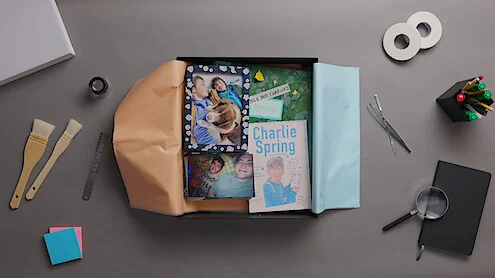
Source: Hodder Children's Books
Heartstopper Forever adapts primary material from Heartstopper Volume 6 and the Nick and Charlie novella, both by Alice Oseman, while incorporating character history from Volumes 1 through 5 already covered in Seasons 1 through 3. The film is not a panel-for-panel translation — showrunner and writers made deliberate divergences to fit 114 to 115 minute runtime, TV-MA thematic expansion, and cinematic location grammar replacing comic time jumps. Understanding source order helps: read or reread Volume 6 after Season 3 equivalent events, then novella for supplemental Nick-Charlie interiority the film partially externalizes through performance.
Major faithful beats include Nick's fear-driven breakup, Charlie's heartbreak, friend group fracture, and Leeds reconciliation goal. Changes appear in montage pacing, consolidation of supporting subplots, and Tao-Elle ending ambiguity emphasized differently on screen versus page. Derek Jacobi's adult character and expanded university visit sequences represent film-original or amplified material without contradicting comic canon — Oseman involvement in production suggests coordinated canon rather than rogue retcon.
Book Volume 6 promotional imagery appears across wiki assets; see book volume six image references on related pages. News and Updates covers Volume 6 reprint tie-ins at film launch.
Key Differences and Fan Debates
Debated divergences include Tao and Elle's romantic status — comics and film align on breakup and friendship but film leans harder into Berlin reunion ambiguity without explicit panel equivalent. Nick and Charlie's beach reunion staging adds widescreen landscape and score swell where comics used quieter conversational beats; emotional truth remains aligned per Reviews and Ratings citing Oseman's public approval. Anna Maxwell Martin replacing Olivia Colman as Sarah Nelson affects casting continuity only, not Sarah's narrative function supporting Nick.
Volume 6's scatter of ensemble chapters compresses into film montage, reducing Isaac and Imogen solo page count while preserving representation milestones. Interior monologue-heavy comic panels become Kit Connor and Joe Locke micro-expressions — Guides Ending Explained Deep Dive analyzes translation techniques. Olivia Rodrigo Stupid Song never belonged to comics; trailer-only placement distinguishes marketing from adaptation.
Video embed above uses verified ID Yyvp0_Tdh1A for adaptation-focused analysis. Easter Eggs Callbacks notes visual comic panel homages in costume and props despite dialogue changes. Independent fan wiki — not Alice Oseman's official publisher site.
This analysis compares Alice Oseman's Volume 6 panels and Nick and Charlie novella text with Netflix's feature screenplay, flagging where dialogue transfers verbatim versus where filmmakers expanded university geography and beach climax staging for cinematic scale.
Pay attention to Tao and Elle's Berlin ambiguity — a divergence some comic readers debate — and Sarah Nelson recasting context, which affects family scenes without changing plot function. Useful companion to Plot and Ending Explained after reading both mediums.
Reading Order Recommendations
Optimal reading order for cross-media fans: Heartstopper Seasons 1–3, then Volume 6 graphic novel, then Nick and Charlie novella, then Netflix film, then Ending on a Hi documentary for creator commentary on divergences you just witnessed. Alternate order — film before Volume 6 — works but changes surprise profile; Book vs Movie avoids prescribing enjoyment hierarchy.
Volume 6 cover art and novella intimate scenes provide context film compresses; keep both books nearby during first film watch if comic literacy is high.
Spoiler-Safe Reading Tips
If avoiding comic spoilers before film: stop Volume 6 before university arc sections or read after film using Book vs Movie as map of what you would have encountered.
Novella offers Nick-Charlie interiority enhancing film rewatch without requiring read first — short format accessible between July 17 film and July 24 documentary.
Adaptation Philosophy
Heartstopper adaptations under Alice Oseman's involvement historically prioritize emotional fidelity over literal panel reproduction — Forever continues that philosophy with Volume 6 and novella synthesis. Changes serve cinema: geography visible, faces acting silence, score substituting captions. Debating every divergence misses forest for trees; Book vs Movie maps major forks for interested readers.
Keep graphic novels and film as companion experiences neither cancels the other — Is This the Finale discusses screen ending while comics continue independently.
Frequently asked questions
Which books does the film adapt?
Primarily Volume 6 and the Nick and Charlie novella, building on earlier volumes covered in Seasons 1–3.
Are there major plot changes?
Structure and some subplot emphasis differ; core Nick-Charlie arc remains faithful in outcome.
Should I read the books first?
Seasons 1–3 first, then Volume 6 optional before or after the film.
Did Alice Oseman approve changes?
Oseman collaborated on the adaptation; creator commentary appears in Ending on a Hi documentary.